Transportation
Fleet operations and employee commuting are the largest sources of County greenhouse gas emissions, together accounting for the majority of total emissions, with employee commuting alone making up 50%. These emissions are primarily driven by employees driving alone in gas-powered vehicles and the continued use of fossil fuel vehicles in the County fleet.
To reduce this impact, the County is advancing strategies to shift travel behavior and transition to cleaner vehicles. Efforts to reduce commute emissions include expanding access to public transit, increasing carpooling and biking, supporting low-carbon travel options, and implementing a Countywide telework policy. Key actions include launching an e-bike and e-scooter subsidy program and redesigning commute benefits to better support sustainable options. At the same time, the County is transitioning its fleet to zero-emission vehicles through investments in electric vehicles, alternative fuels, and charging infrastructure.
Key efforts include completing departmental fleet transition plans, developing an EV infrastructure deployment plan, securing funding for charging ports across facilities, replacing gas-powered vehicles with zero-emission alternatives, and piloting heavy-duty equipment and backup battery systems. Together, these efforts reduce emissions, improve air quality, and lower operating costs.
Goals:
- 2030: 80% reduction in employee commute emissions
- 2030: 100% of County motor pool vehicles are electric and 80% of all County light to mid-sized vehicles are electric
- 2035: 95% reduction in employee commute emissions
- 2035: 100% of all County light-to-mid duty vehicles are electric
Summary of Strategies:
- Redesign Employee Commute Program known as “Shift”
- Provide Flexible Workspaces
- Create an Incentive and Fee Structure for Parking at County Worksites
- Increase Non-motorized Transportation
- 2.1 Conduct a Zero Emission Vehicle Adoption Analysis
- 2.2 Establish a County Department Fleet Working Group
- 2.3 Phase-in Electric Vehicles into County Motor Pool and Departmental Fleets
- 2.4 Install Electric Vehicle Charging Infrastructure
- 2.5 Phase-in Hybrid Vehicles for Mid-to-Heavy-duty Vehicles
- 2.6 Adopt a Zero-Emission Vehicle First Policy
- 2.7 Fuel with Alternate Fuels
- 2.8 Plan for Diesel Free by 2033
- 2.9 Reduce Vehicle Idling
See Focus Area 2: Transportation in the Government Operations Climate Action Plan (PDF) for more details on objectives and actions.
The Latest News & Events
27
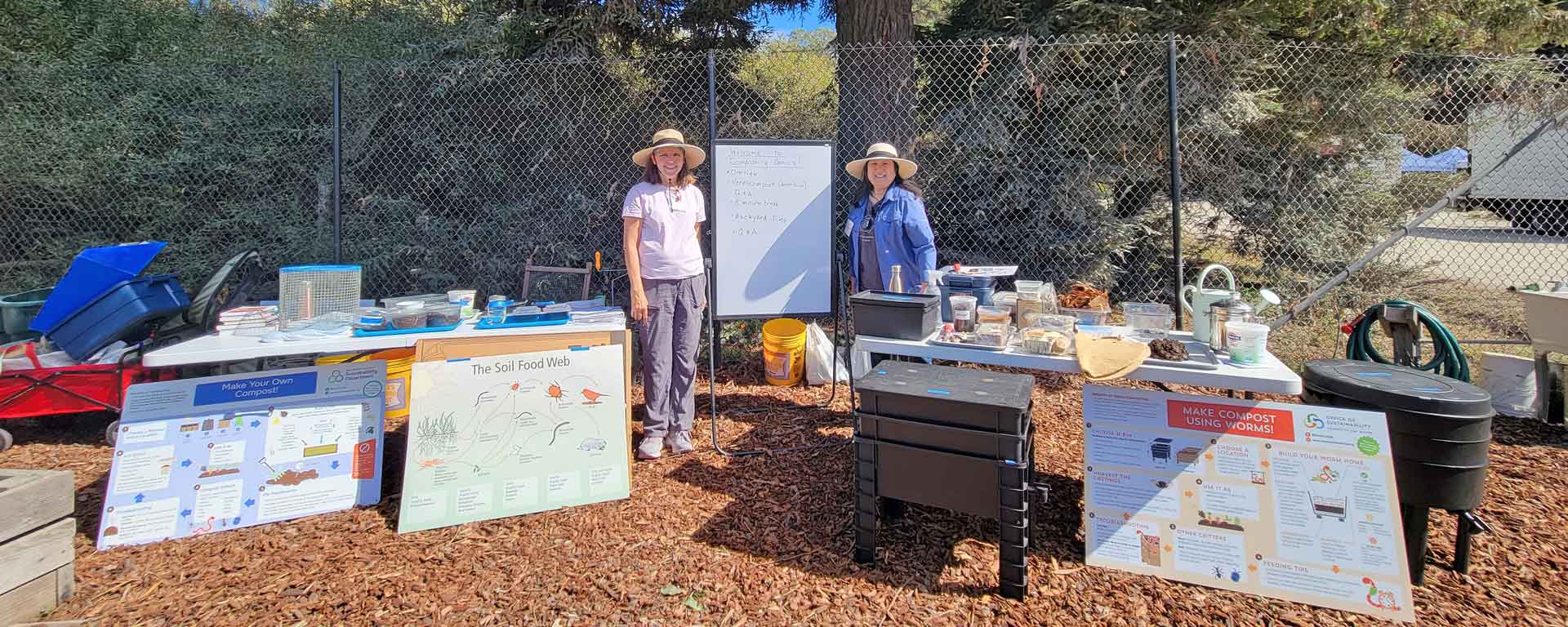
Learn how easy and fun it is to recycle your fruit and vegetable scraps, leaves, and plant cuttings into compost in these free workshops! These workshops teach composting options suitable for those with or without a backyard. Apartment dwellers welcome! Compost provides valuable nutrients for your garden soil, helps retain moisture, which saves water, prevents erosion, loosens clay and compacted soils for better drainage, and suppresses weeds. It is rewarding to know you are turning what some consider waste into precious organic material for your garden.
Discounts and rebates for backyard compost and worm compost bins will be distributed to San Mateo County residents!
COMPOST WORKSHOP
Date: June 27, 2026
Time: 10:00 AM – 12:00 PM
Location: Foster City Community Garden
Register here.