

Youth Climate Ambassadors Graduation & Community Impact Projects
After two semesters of hard work, our 7th Youth Climate Ambassadors cohort officially graduated! At their graduation event in mid-May, students presented to peers, staff members, family, and friends about their Community Impact Projects. These projects were developed by our youth leaders to address climate and sustainability issues across San Mateo County. We’re excited to share their work on climate advocacy and resilience with the community!
About the YCA Program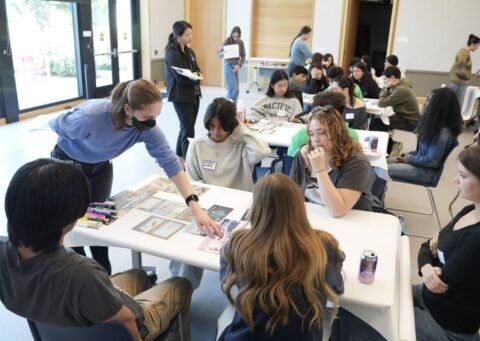
Youth Climate Ambassadors (YCA) is an eight-month leadership program that empowers 9th through 12th graders in San Mateo County to become local climate leaders, fostering youth-led action to reduce greenhouse gas emissions and cultivate resilient, sustainable communities. Throughout the program, students learn about climate science and advocacy, attend retreats and workshops, and receive mentorship from local climate and sustainability professionals. This program is a partnership between the San Mateo County Sustainability Department, the San Mateo County Office of Education, Peninsula Clean Energy, and Citizens Environmental Council.
After diving deep into the causes and effects of climate change, students design hands-on Community Impact Projects that apply their acquired knowledge and skills to address a real-world problem in San Mateo County. Students work together in small groups to plan and implement projects that reduce greenhouse gas emissions and create a more resilient and sustainable community.
We’re proud of their dedication and passion for sustainability and inspired by the Community Impact Projects they designed, planned, and executed. Keep reading to learn more about some of the students’ recently completed projects!
Community Impact Projects
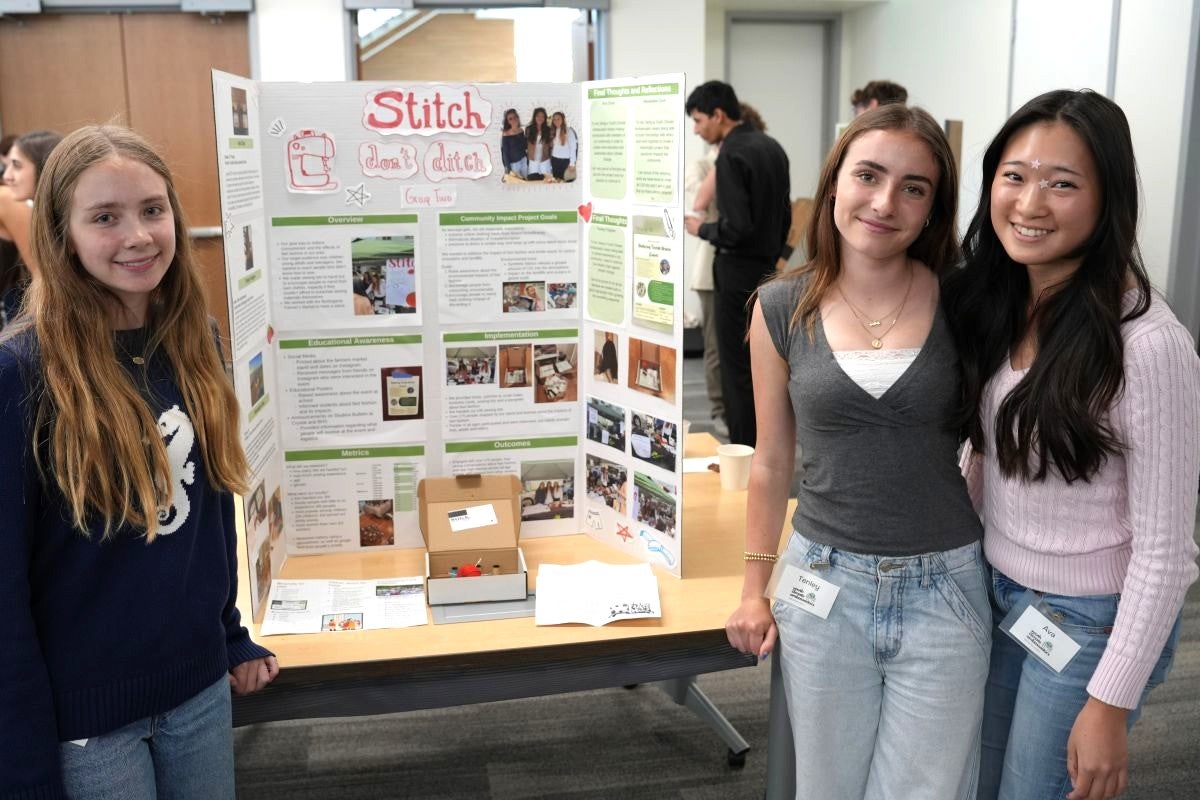
Stitch Don’t Ditch, Alexandra and Ava from Crystal Springs Uplands and Tenley from Burlingame High School
This project aimed to reduce textile waste in local landfills by spreading awareness about harmful impacts of fast fashion on the environment and encouraging individual lifestyle changes with upcycling toolkits. The toolkits included pamphlets about the negative consequences of fast fashion, unsustainable vs sustainable clothing brands, environmental and racial justice aspects, and sewing instructions for easy upcycling projects. Using social media to promote their project, the students distributed these toolkits at the Burlingame Fresh Market. Ultimately, they wanted to reduce the greenhouse gas emissions that stem from decomposing polyester in landfills and bring attention to low-income communities disproportionately affected by landfills.
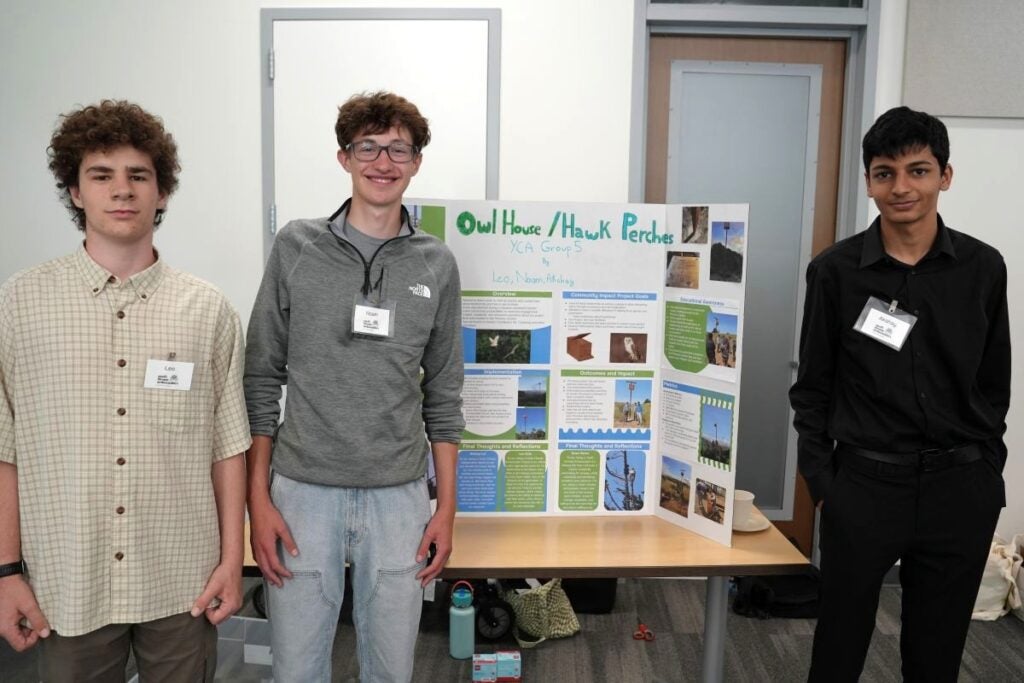
Owl Habitat and Ecosystem Resilience, Akshay from San Mateo High School, Leo from Aragon High School, and Noam from Menlo-Atherton High School
The overall purpose of this project was to promote local biodiversity, inform the community of natural pest management, and improve a local garden by addressing the loss of habitat for local barn owls and hawks. They worked with University of California Agriculture & Natural Resource staff to build and install five owl boxes and two hawk perches at Phoenix Garden in San Mateo. The installation will also help Phoenix Garden with its rodent problems, as gophers had compromised the structural integrity of the posts surrounding the garden enclosure. While the physical installation was a major component of their project, the education of others on their experiences, struggles, and motivations was also important to them. To share more information with garden visitors, they created informational pamphlets to inform about biodiversity and habitat resilience at Phoenix Garden.
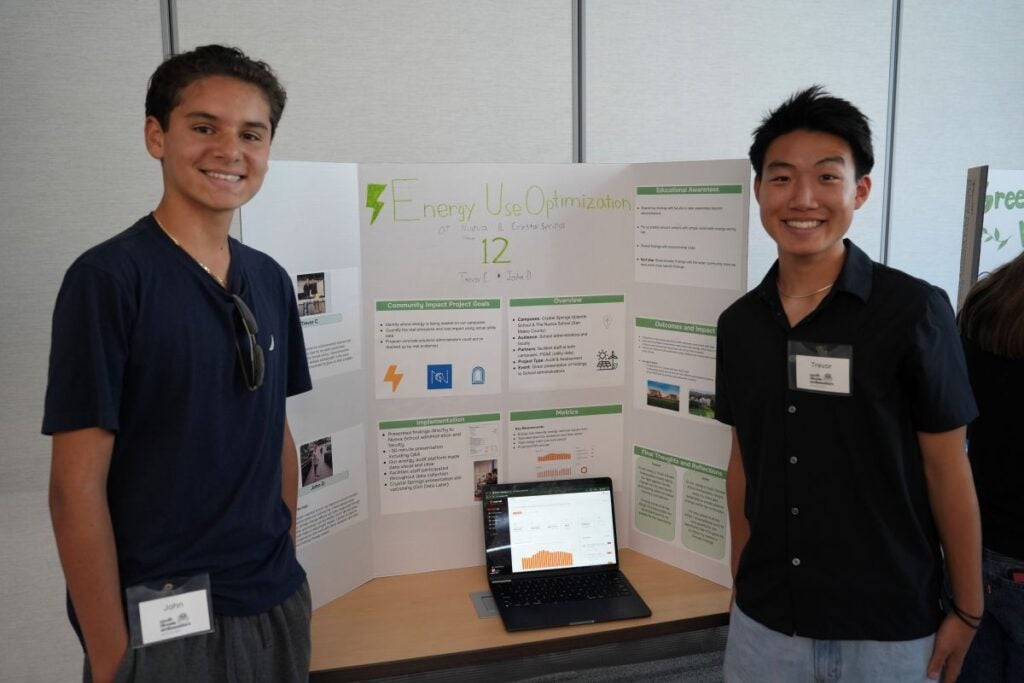
Energy Use Optimization, John from Crystal Springs Uplands and Trevor from the Nueva School
This project focused on clean energy and energy efficiency within the Nueva School and Crystal Springs Uplands school communities. The group chose this topic because buildings are one of the largest sources of greenhouse gas emissions in the county, and schools use a significant amount of energy every day through methane gas appliances, lighting, heating, cooling, and electronic devices. Their project involved conducting a data-driven energy audit of classrooms and school facilities using data collected from school officials and San Mateo County Energy Watch to estimate energy waste, greenhouse gas emissions, and possible financial costs connected to inefficient energy use. To raise awareness, the group educated students, teachers, faculty, and school administrators about how individual habits and school-wide improvements can reduce emissions over time.
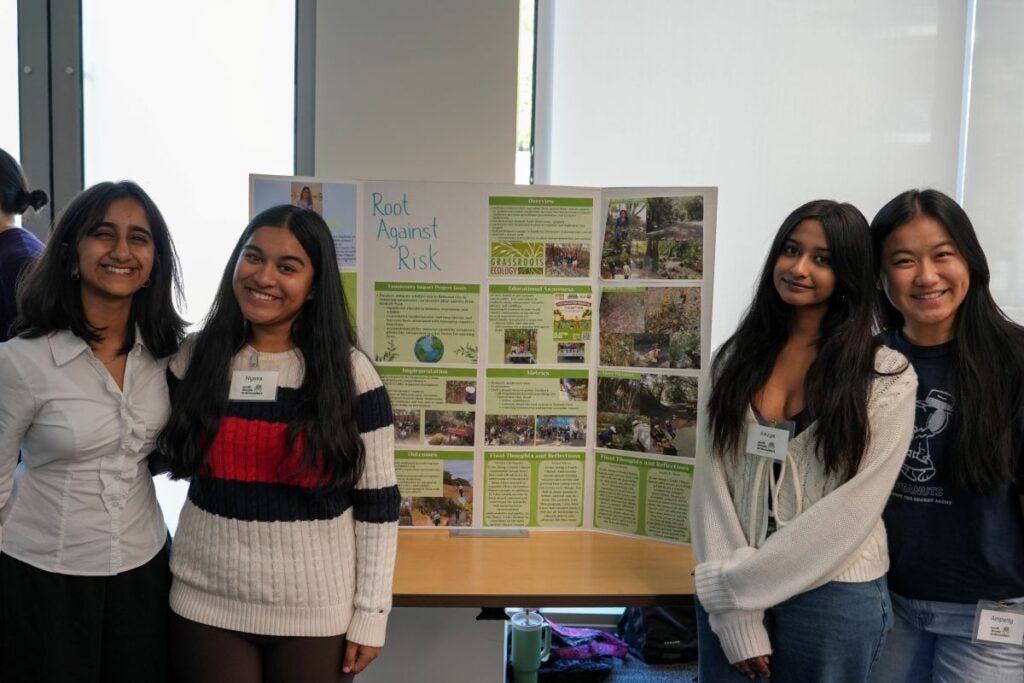
Root Against Risk, Amperly, Kavya, Medha, and Nyssa from San Mateo High School
The purpose of this project was to mitigate wildfire risk in Redwood City by removing cotoneaster, an invasive plant species, from Stulsaft Park. The group chose cotoneaster removal because the accumulation of dry material caused by overgrown plants is a key factor for sparking fires, and wildfire damage and smoke pose significant threats to humans, vegetation, and wildlife. They partnered with Grassroots Ecology to organize a work party event and convene community members to participate in cotoneaster removal and a nature walk. During the hike, group members shared information about native plants, biodiversity, and overarching climate change topics in coordination with Grassroots Ecology volunteers.
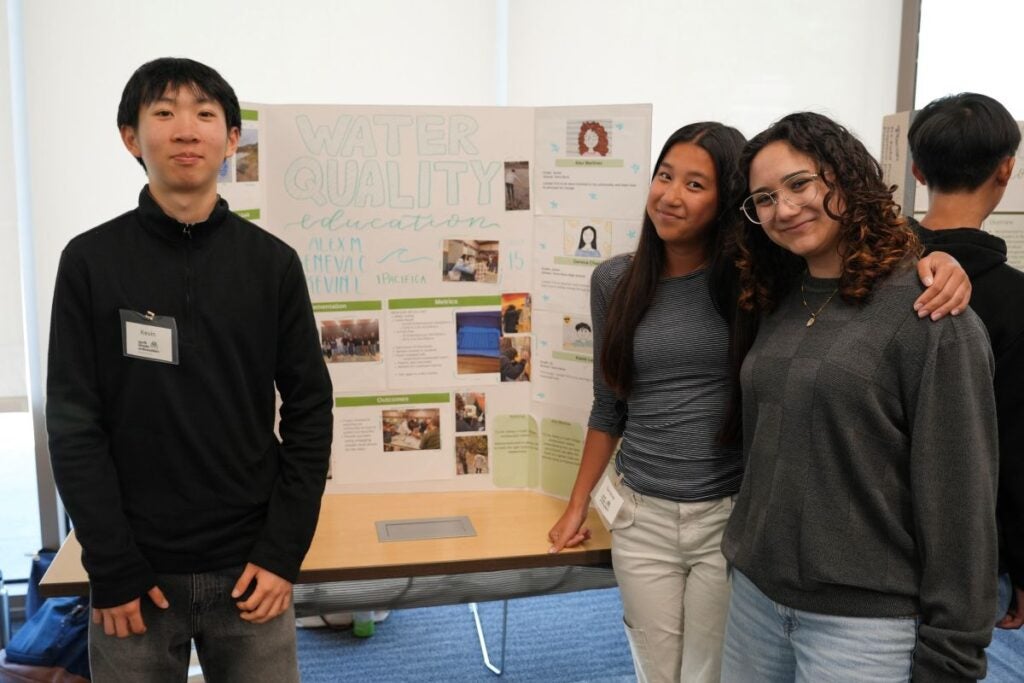
Water Quality Education, Alex, Geneva, and Kevin from Terra Nova High School
The project aimed to address poor water quality in Pacifica’s San Pedro Creek Watershed, where Pacifica State Beach, also known as Linda Mar Beach, consistently ranks among the state and nation’s most polluted beaches due to elevated levels of indicator bacteria (E. coli and enterococcus). The group’s goal was to centralize and unify existing water monitoring efforts and translate the data into comprehensible information for the community to spread awareness and encourage behavior change. To research, they met with local experts and helped test water sites for indicator bacteria before hosting a community meeting to discuss potential solutions. They also hosted a table at a local elementary school’s science night to discuss ways the community could help mitigate the problem.
We’re so proud of what our Youth Climate Ambassadors have accomplished in eight months and are constantly inspired by their bright ideas and commitment to climate action in San Mateo County.
“I came away [from the YCA program] understanding that environmental and climate challenges are deeply interconnected systems rather than isolated issues. Energy, transportation, food, and waste all influence one another, and effective solutions require coordinated, multi-level approaches from policy changes to individual behavior shifts. I also learned that while the scale of the problem is global, many impactful solutions are local, practical, and already underway. In San Mateo County, I saw how these challenges show up in tangible ways, such as water management during drought, transportation emissions from commuting patterns, and waste reduction efforts. I was encouraged by local initiatives focused on renewable energy adoption, habitat restoration, and community education, which show that meaningful progress is possible when communities collaborate and prioritize sustainability.” – Yocelyn, 10th Grade, YCA Cohort 7 graduate
Congratulations to our 2025-26 Youth Climate Ambassadors! We can’t wait to see what you do next.
For more information on the Youth Climate Ambassadors program, visit sustainsmc.org/yca.
Stay tuned for our next round of applications opening later this summer!

