
Using Translation

The County of San Mateo has added a translation feature developed by Google Translate to assist web visitors in understanding information on this website in a variety of foreign languages. Please be aware that Google Translate, a free third party service which the County does not control, provides automated computer translations that may not give you an exact translation. The County cannot guarantee the accuracy of translations through Google Translate so translations should not be considered exact and only used as a rough guide. Anyone relying on information obtained from Google Translate does so at his or her own risk. The County disclaims and will not accept any liability for damages or losses of any kind caused by the use of the Google Translate feature.

Pescadero marsh is at risk of flooding surrounding areas
FLOODING
Building a resilient community.

Flooding

Extreme precipitation events are a substantial threat in San Mateo County and are projected to continue to increase as a result of climate change. Following years of drought, extreme storms and bomb cyclones impacted communities across San Mateo County in December 2022 and January 2023. Falling trees and landslides were concerns with repeated storms throughout winter 2022-2023.

increased flooding on county roads due to climate change effects

The increased probability of extreme flooding means that creeks and municipal storm sewers are more likely to be overwhelmed. Precipitation-related inland flooding may occur at the same time as coastal storm surge, increasing the total amount of flood water and potentially blocking drainage systems. Rising sea levels are expected to elevate the risk of this type of event.
Communities in floodplains and urban areas with high runoff may be at the greatest risk for these impacts; however, communities that cannot afford to retrofit or relocate their homes and business, as well as people who face barriers to evacuation, may be the most vulnerable to the impacts of repeated flooding events. Learn more about flooding impacts and adaptation strategies (PDF).

Impacts

Health impacts from extreme precipitation events may include:

  • Exposure to waterborne diseases via sewage-contaminated water.
  • Skin and lung infections due to increased mold growth in moist conditions.
  • Vector-borne diseases due to more widespread mosquito growth in standing water.
  • Emotional and psychological trauma due to a hazard event or post-event conditions.

To support local jurisdictions and communities to plan for flooding events, Climate Ready SMC commissioned traffic modeling for flooding scenarios. The below impacts and adaptation strategies were included in the resulting study. 

Transportation impacts from flooding may include:

  • Flooded underpasses limiting access to and from highways.
  • Traffic delays countywide, particularly if one of the points of access to the Coast, or other major arteries, are impacted by a large flood.
  • Delays in evacuation and emergency response due to flooding and traffic congestion.

Possible Adaptation Strategies

Policy and Communication Strategies

  • Develop funding and finance mechanisms to help vulnerable communities elevate or adapt homes, buildings, and businesses in flood-prone areas.
  • Create incentive programs to reinforce structures and homes to minimize flood damage.
  • Provide improved communication and education to the public of evacuation procedures and routes.
  • Support microgrids for communications, water, and power.
  • Provide early and continuous multilingual real-time communication during a flood event of current roadway status and alternative route delays. This can include a resilient communication chain that includes schools, community centers, and common destinations like corner stores.

Transportation and Flooding Strategies

  • Install green infrastructure that also addresses flooding hazards.
  • Install porous roadways.
  • Increase the capacity of local alternative routes to lessen delays for the entire transportation network.
  • Harden infrastructure vulnerable to flooding events with stronger foundations and enhanced stormwater management facilities.
  • Improve drainage systems through capacity expansion and expand pumping of underpasses and tunnels and elevation of low-lying road and rail infrastructure.

The Latest News & Events

Compost Workshop
Jun
27

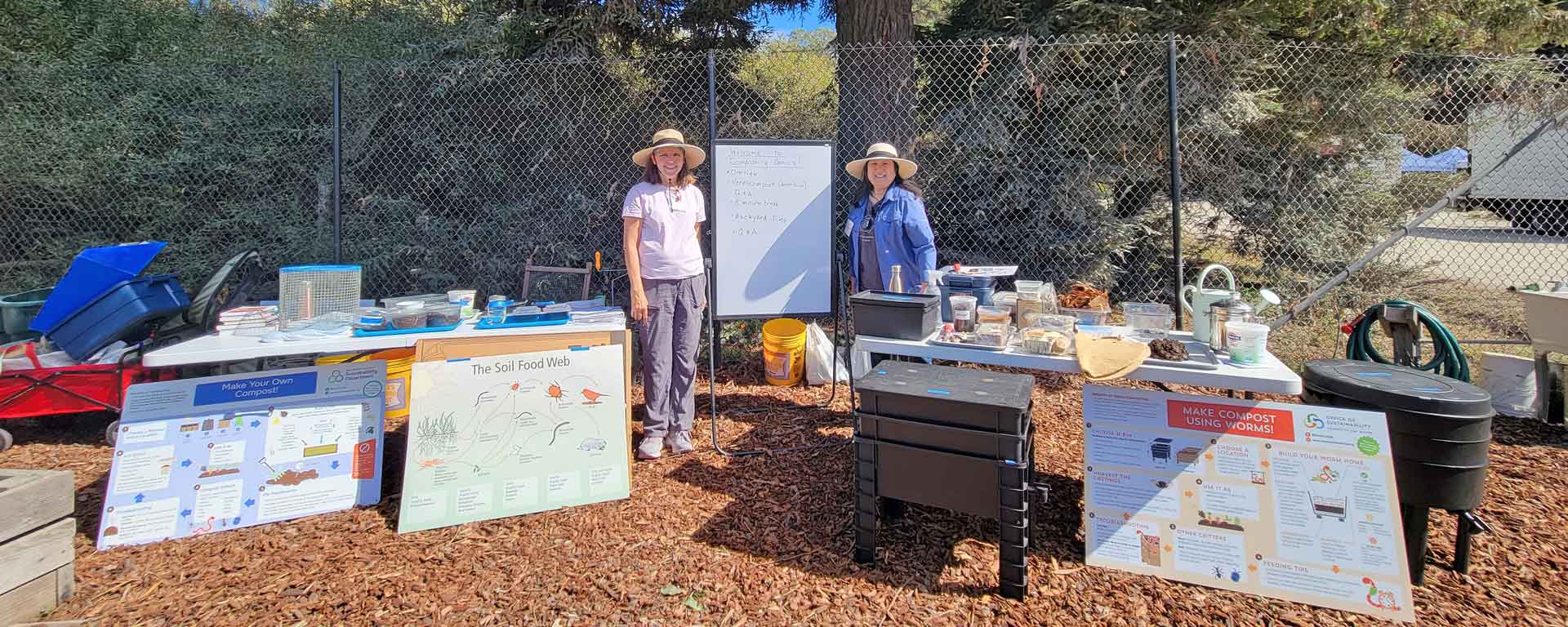
Learn how easy and fun it is to recycle your fruit and vegetable scraps, leaves, and plant cuttings into compost in these free workshops! These workshops teach composting options suitable for those with or without a backyard. Apartment dwellers welcome! Compost provides valuable nutrients for your garden soil, helps retain moisture, which saves water, prevents erosion, loosens clay and compacted soils for better drainage, and suppresses weeds. It is rewarding to know you are turning what some consider waste into precious organic material for your garden.

Discounts and rebates for backyard compost and worm compost bins will be distributed to San Mateo County residents!

COMPOST WORKSHOP

Date: June 27, 2026
Time: 10:00 AM – 12:00 PM
Location: Foster City Community Garden
Register here.

Collage with four nature images and text in middle that reads '2026 Earth Month'
Happy Earth Month! As we step further into spring, the month of April reminds us to celebrate our planet and continue…
After two semesters of hard work, our 7th Youth Climate Ambassadors cohort officially graduated! At…
In January, we had an amazing Coffee and King Tides event at Cooley Landing in East Palo Alto! We…